
HOW IT WORKS
Seven years. One Changemaker.
Amazing Maasai Girls Project is committed to supporting each child, from the moment she's most at risk after elementary school — through secondary school, through university — and graduate her as a qualified professional and a proven community leader.
This seven-year commitment can be divided between three phases, focused on: protection, education & leadership.

Phase 3: Lead
Every girl graduates as a leader.
Beginning in 2026, AMGP has introduced the Changemaker Capstone.
Every university scholar returns to Laikipia throughout her years at school, to join or run a project that strengthens her community. By the point of graduation, she's not just a degree-holder. She's a leader with a track record.
This program is not optional. It is a condition of every university scholarship we award.
Why a Changemaker Capstone?
Most scholarship programs measure outputs: did she finish school? AMGP measures transformation: did she change her community?
For most of the global education sector, a scholarship is a transaction. Pay tuition, count graduates, measure success. AMGP did this work for fifteen years and proved the model — but we also saw something the data couldn't capture:
Our graduates were going home to villages where almost nothing had changed.
They had degrees and diplomas in a place where most girls still didn't finish primary school.
AMGP were producing exceptional individuals who want to see change at home — but who weren't equipped to produce community change at scale.
Consulting with our graduates in spring 2026, it was clear - they want to drive change.
Many graduates are already doing this work in an informal way: paying for their sisters to go to school; working in the local clinic; educating younger girls on the laws and risks around FGM etc. We realized it’s time to bake it into our programming and build it out fully.
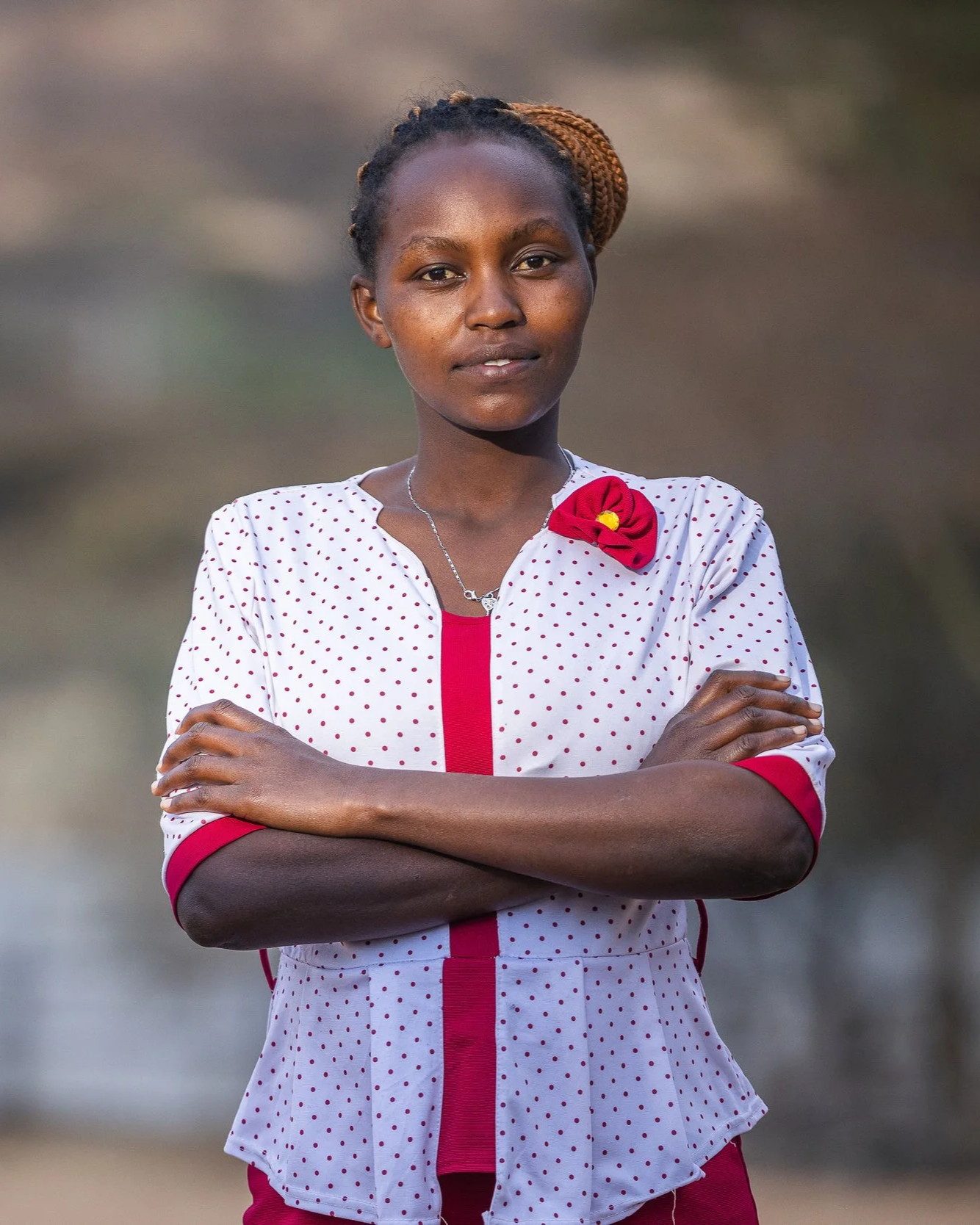
Mercy, a former “Amazing Girl”, who now works at St Francis Secondary School where she attended as a student. All of our students are encourage to return to their communities after they graduate, either through the Changemaker Capstone or through their direct work.
The future AMGP is building now
Picture a Maasai community in northern Laikipia in 2032.
The woman running the health outreach program at the local medical dispensary — she's a Changemaker.
The teacher who started the girls' study group at the primary school to the south — she's a Changemaker.
The woman who organized the solar lantern cooperative that brought light to 47 households — she's a Changemaker.
The young ladies who teamed up to educate their elders and finally end Female Genital Mutilation — they are Changemakers too.
Each Changemaker touches 50+ lives
The Capstone is designed to produce a generation of educated women who come back home with skills, credentials, and a track record of getting things done.
The math is striking in its simplicity. Each cohort of 24 graduating Changemakers reaches an estimated 50+ community members through her project in her first year alone. Over a career — 30 years, the work she does long after AMGP's role is finished — that's generational change. It's the difference between a scholarship and a movement.
What changes, specifically? The things that have always driven the cycle of poverty in Laikipia: girls marrying young because no one showed them another path. Families keeping daughters home because education felt distant and irrelevant. Communities where the knowledge to challenge harmful practices existed nowhere except outside. The Changemaker who comes home as a nurse, a teacher, a social entrepreneur — she is the counter-evidence. She is proof, embodied, that another life is possible.
It's a modest-sounding ambition on paper — 24 women a year. But 24 women a year, every year, each touching 50+ lives, in communities where educated female leadership has never existed before — that's not modest at all. That's a transformation that compounds
How a Maasai girl becomes a Changemaker.
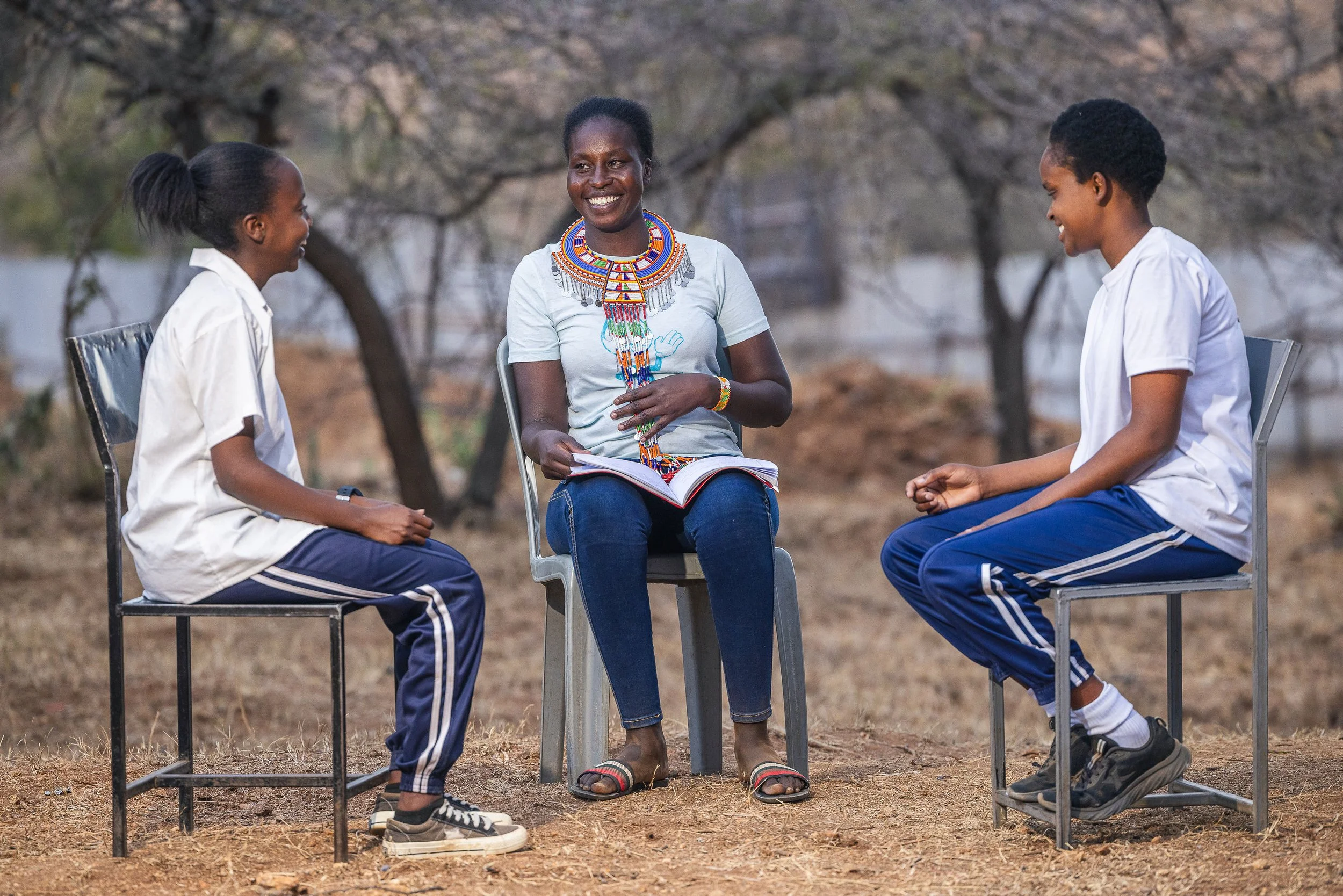
Each Capstone runs concurrent with university — four years of gathering, designing, executing, and graduating. Three meetings per year in Nanyuki, plus independent work between sessions.
1. Gather
Three times a year, our scholars meet in Nanyuki with Joan, our Nairobi-based facilitator. They explore the issues they care about — health, education, agriculture, entrepreneurship — and the gaps in their communities.
2. Design
Each girl identifies a community need and designs her own project. We give no seed funding. Resourcefulness is part of the leadership training — the girls who lead well are the ones who figure out how to build with what they have.
3. Execute
During school breaks, each scholar returns to her community and works on her project. Some teach. Some run health workshops. Some build agricultural cooperatives. Some launch small businesses. Real impact, real accountability, all four years.
4. Graduate
Every girl finishes university with a degree AND an active community project. She is not just a graduate. She is a Changemaker. The project continues after she leaves university — many become her career.
Want to fund this?
The Capstone puts educated, skilled Maasai women in a position to lead their community toward a future that is more equitable and prosperous. The program is designed and run alongside a dear friend of AMGP, a Nairobi-based educator with a decade of experience designing leadership programs for young women across East Africa. This transformational program takes ~$5K per year per cohort to run.