
IMPACT
Fifteen years. One amazing community.
A measurable arc of impact.
Every dollar tracked. Every commitment fully funded. Every cohort followed for life. Here's where we are today.
201
LIFETIME STUDENTS
Supported since 2012, across every cohort.
139
SECONDARY GRADUATES
96% retention, every cohort.
168
ACTIVE STUDENTS
High school + university by 2027.
24
NEW CHANGEMAKERS
Each leads a community project.
IMPACT REPORT · 2026 ALUMNAE SURVEY
What happens after the scholarship ends?
In 2026, we asked 47 AMGP graduates one direct question: did the scholarship change the course of your life?
Here is what they told us — about marriage, work, motherhood, and the girls coming up behind them.
47
graduates surveyed
2015-2025
graduation years
region
Laikipia, Kenya
THE QUESTION WE ASKED
If AMGP had not supported your education, what do you think would most likely have happened to you?
— Question 33, 2026 Alumnae Survey · 45 of 47 women responded · multiple answers permitted
60%
would have married earlier
47%
would have left school earlier
44%
would not have continued to post-secondary education
40%
would have fewer chances to work/earn
33%
would have had children earlier.
THE MARRIAGE NUMBERS
Zero of our graduates married before eighteen.
In the Maasai community where our scholars live, roughly one in four girls is married by her 18th birthday. Among AMGP graduates, that number is zero. The youngest age at marriage we recorded was nineteen. The median was twenty-five.
28%
of Maasai girls in Kenya marry before age 18, according to a 2017 UNICEF study.
Source: UNICEF Situation Analysis of Children & Women in Kenya, 2017
0%
of our 47 surveyed graduates married before 18. Median age at marriage: 25. All married women are first wives, none are in polygamous unions.
Source: AMGP Survey, 2026
AFTER SECONDARY SCHOOL
Three in four kept going.
Our scholarships end when secondary school does — but the ambition does not. Of the 47 graduates we surveyed, 35 pursued further education. The largest fields they chose: education, social work, nursing, and medicine. They are training to teach, treat, and lead the next generation in their own communities.
What they're studying
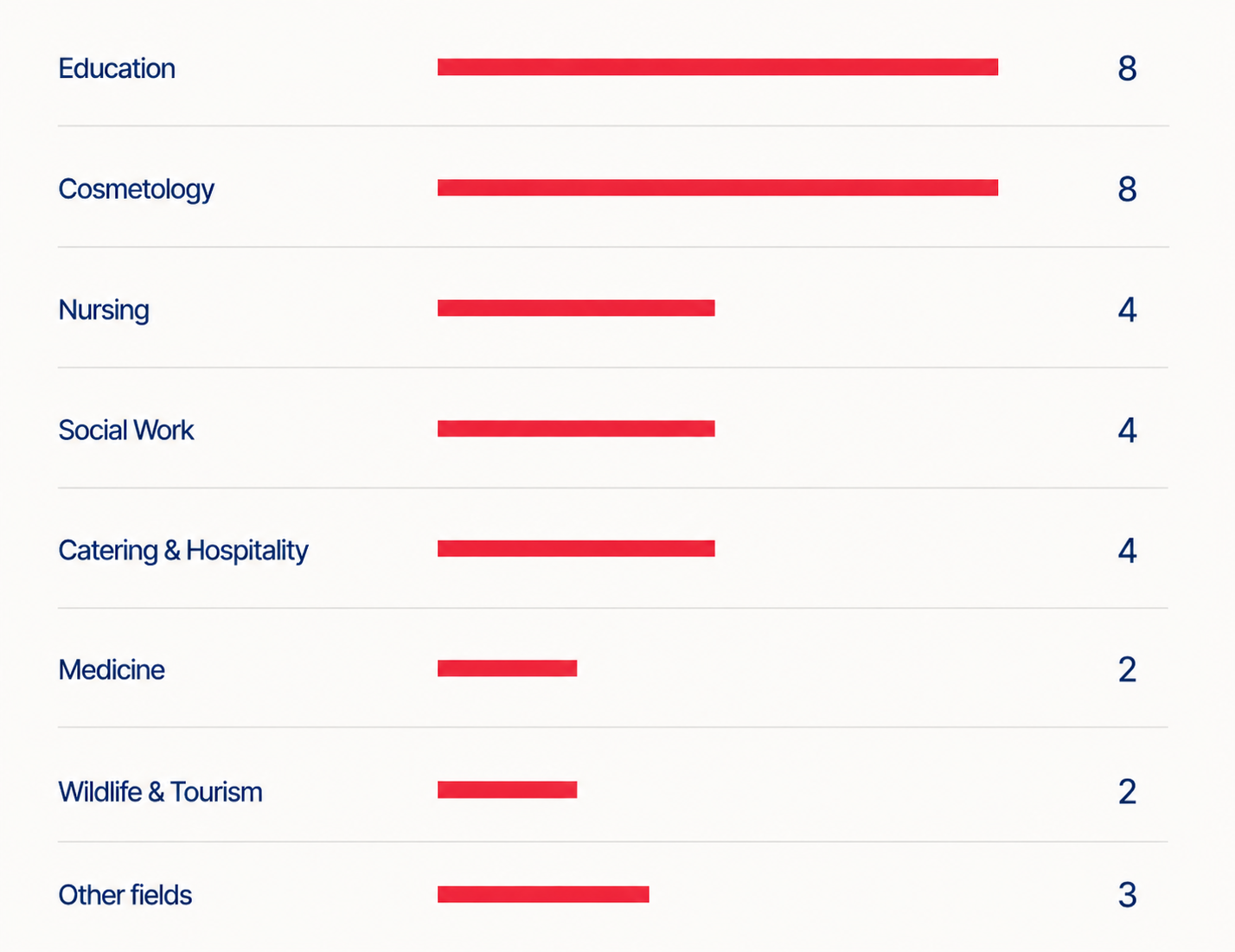
75%
of graduates pursued a degree, diploma, or certificate after secondary school.
10 earned university degrees · 18 earned diplomas · 7 earned vocational certificates.
THE RIPPLE EFFECT
Every graduate is now changing someone else's story
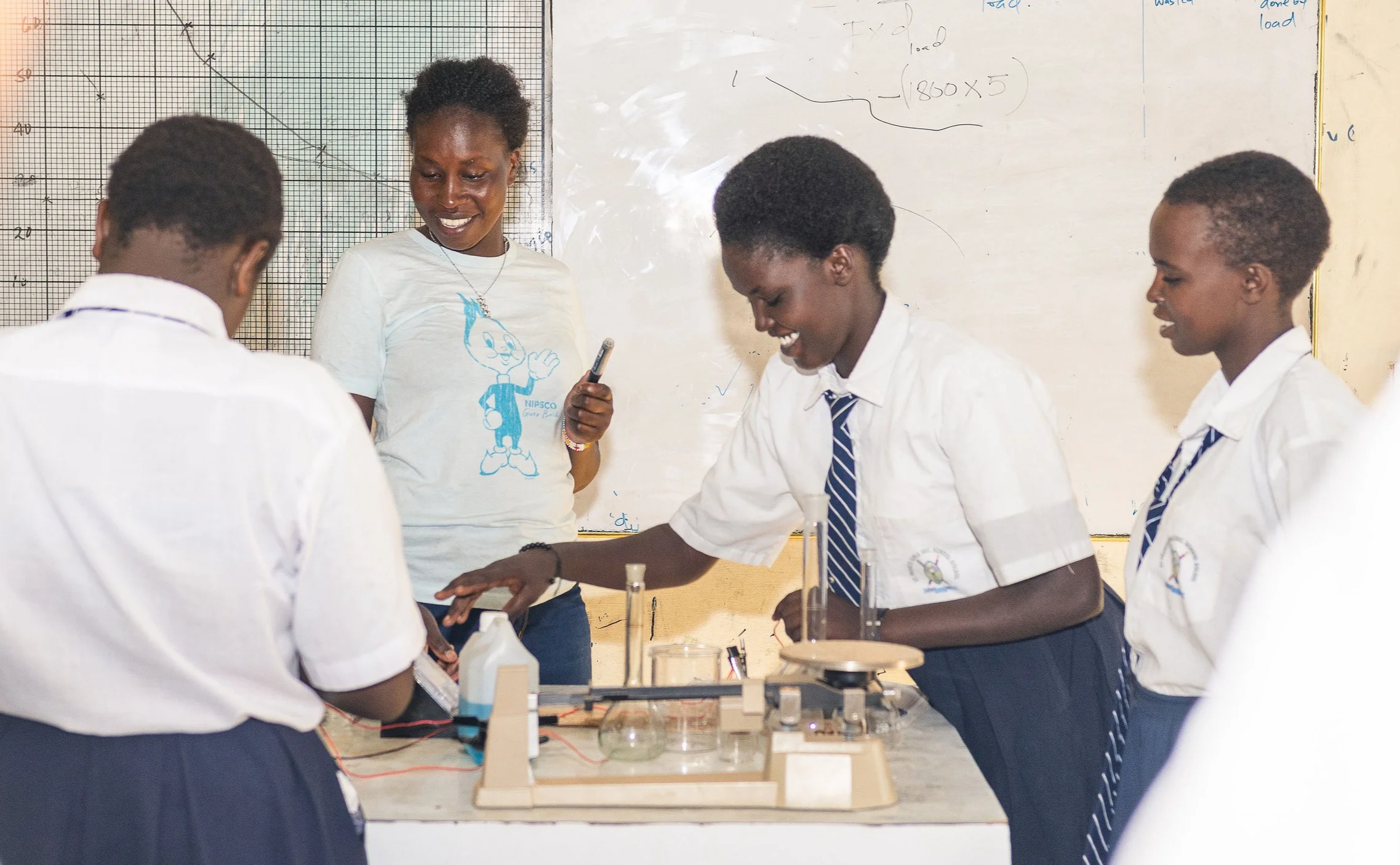
This is the figure we did not expect. Nearly every graduate told us she has personally intervened to keep another girl in school, or to delay her marriage.
Our graduates are paying their sisters' school fees, running guidance sessions, mentoring the cohort behind them.
93%
have personally helped prevent another girl's early marriage or school dropout.
96%
say their education has changed how their family thinks about girls' education.
In Their Own Voices
-
In Their Own Voices -
“Being in medical school has set a good example in my village — that a girl is capable of achieving anything a man can.
“Because of this, many have said no to early marriage and decided to continue with school.”
- NASHAKI MAIYANI KENAI
Graduated 2022 · medical student
"When I first had my child after college, I refused to be married. I had to fulfil my dream first — because everything has its right time.
“I tell other girls: a child is not the end of life. Focus on your future.”
- JACKLINE SOINA MESHAMI
Graduated 2022 · volunteer teacher
“My father said he could not afford to take my two sisters to secondary school — that it was better they got married.
“I stood and decided to pay their school fees myself. One completed Form Four last year. The other is in Form Three.”
- JANE N. KAPARO
Graduated 2016 · works at Loisaba Conservancy
"I do a health survey in the community on malnutrition.
“I follow up with malnourished children and advise mothers on exclusive breastfeeding, family planning, and immunisation. All with zero pay.”
- JACKLINE SOINA MESHAMI
Graduated 2022 · volunteer teacher
WHERE THE WORK CONTINUES
What the numbers don't say.
We share the difficult findings, too. The scholarship breaks the cycle of early marriage — but other pressures persist. These are the places where our work, and our partnerships in Laikipia, are still needed.
45%
FGM still happens — earlier.
45% of respondents had faced Female Genital Mutliation (FGM). Cutting occurs before secondary school for many of our scholars. The scholarship prevents the marriage that traditionally follows — but it cannot prevent what came before. Community-level work remains essential.
51%
Half are not yet earning income.
Cosmetology is now tied with education as our graduates' most popular post-secondary field — yet it tends to produce the weakest earnings. Degree holders earn at noticeably higher rates than diploma and certificate holders. We are using this signal to guide future post-secondary advising.
43%
Most still earn modestly.
Among the 23 graduates currently earning, 10 take home less than 10,000 KES per month — roughly $75 USD. The scholarship opens the door to work; building durable, well-paying careers is the next stage of the journey, and one where post-secondary advising matters most.
One scholarship.
One girl. A
generation changed.
$350 covers a full year of secondary school fees for one Amazing Maasai Girl. That donation creates the ripple — sisters kept in school, daughters born to a mother who chose her own path, villages that now believe our girls can.
About this data: Findings are drawn from the 2026 AMGP Alumnae Survey, completed by 47 unique graduates between April and May 2026. Graduates surveyed completed secondary school between 2015 and 2025. The survey was distributed in English; respondents self-reported all answers.
Community benchmarks: Maasai community statistics cited from UNICEF's Situation Analysis of Children and Women in Kenya (2017) and the Kenya Demographic and Health Survey (2022). National child marriage rate in Kenya declined from 28% in 1997 to 13% in 2022; the rate among the Maasai remains substantially higher.